
How to Cut Metal with a Reciprocating Saw: A Practical Guide

A reciprocating saw cuts metal cleanly and quickly when it's fitted with the right blade and run at the right speed, both of which matter more for metal than they do for wood. Get either wrong and you end up with a blade that snaps, wanders off the line, or burns out halfway through the cut.

This guide covers blade selection, setup and practical considerations for cutting common steel products. It also explains when ordering material cut to length may be a better option.


Choosing the Right Reciprocating Saw Blade for Metal

Reciprocating saw blades for metal come in three main types, and the difference matters more than most people assume. 


1.    High-speed steel (HSS) blades are hard but brittle, so they cut cleanly but can snap if the blade flexes mid-cut. 

2.    Bi-metal blades solve that by welding HSS teeth onto a flexible spring-steel body, which is why they're the standard choice for general metal cutting, hard-wearing at the tooth without the snapping risk. 

3.    Carbide-tipped blades go further again, built for the toughest or most abrasive material, stainless steel, cast iron, thick section, at a higher price and with less tolerance for flexing during the cut.


Check that the blade remains long enough to extend beyond the workpiece throughout the full stroke. An unsuitable length can allow the tip to strike the material during cutting. Follow the saw and blade manufacturers’ guidance on blade length and workpiece dimensions.

Teeth per inch (TPI) is the other half of the decision: thinner material needs more teeth so the blade doesn't skip and strip its teeth on thin stock. Blade manufacturers put that at 14 to 18 TPI for thin metals, sheet and conduit, stepping down to a coarser, faster-clearing blade as the material gets thicker and more of each tooth's edge is doing the work. 

Put simply, the best blade for cutting steel comes down to matching blade type and TPI to what you're cutting, not defaulting to whatever's in the pack.


Setting Up the Cut

Metal cutting needs a slower stroke speed than wood, most reciprocating saws with variable speed should be run at the lower end of the range, since pushing too fast overheats the blade and dulls the teeth well before they've done much cutting. Let the blade do the work rather than forcing it through.

Rest the saw's shoe firmly against the material before starting the cut and use it as a pivot point, this keeps the blade stable and stops it skating across the surface on the first stroke. Starting the cut at a shallow angle, then levelling out once the blade has bitten in, generally gives a cleaner start than going in flat from the first stroke.
 

Setting Up the Cut

Metal cutting needs a slower stroke speed than wood, most reciprocating saws with variable speed should be run at the lower end of the range, since pushing too fast overheats the blade and dulls the teeth well before they've done much cutting. Let the blade do the work rather than forcing it through.

Rest the saw's shoe firmly against the material before starting the cut and use it as a pivot point, this keeps the blade stable and stops it skating across the surface on the first stroke. Starting the cut at a shallow angle, then levelling out once the blade has bitten in, generally gives a cleaner start than going in flat from the first stroke.


Cutting Technique by Material

Solid bar and structural sections cut fairly predictably: keep the blade square to the material and let the stroke length do the work rather than forcing lateral pressure.

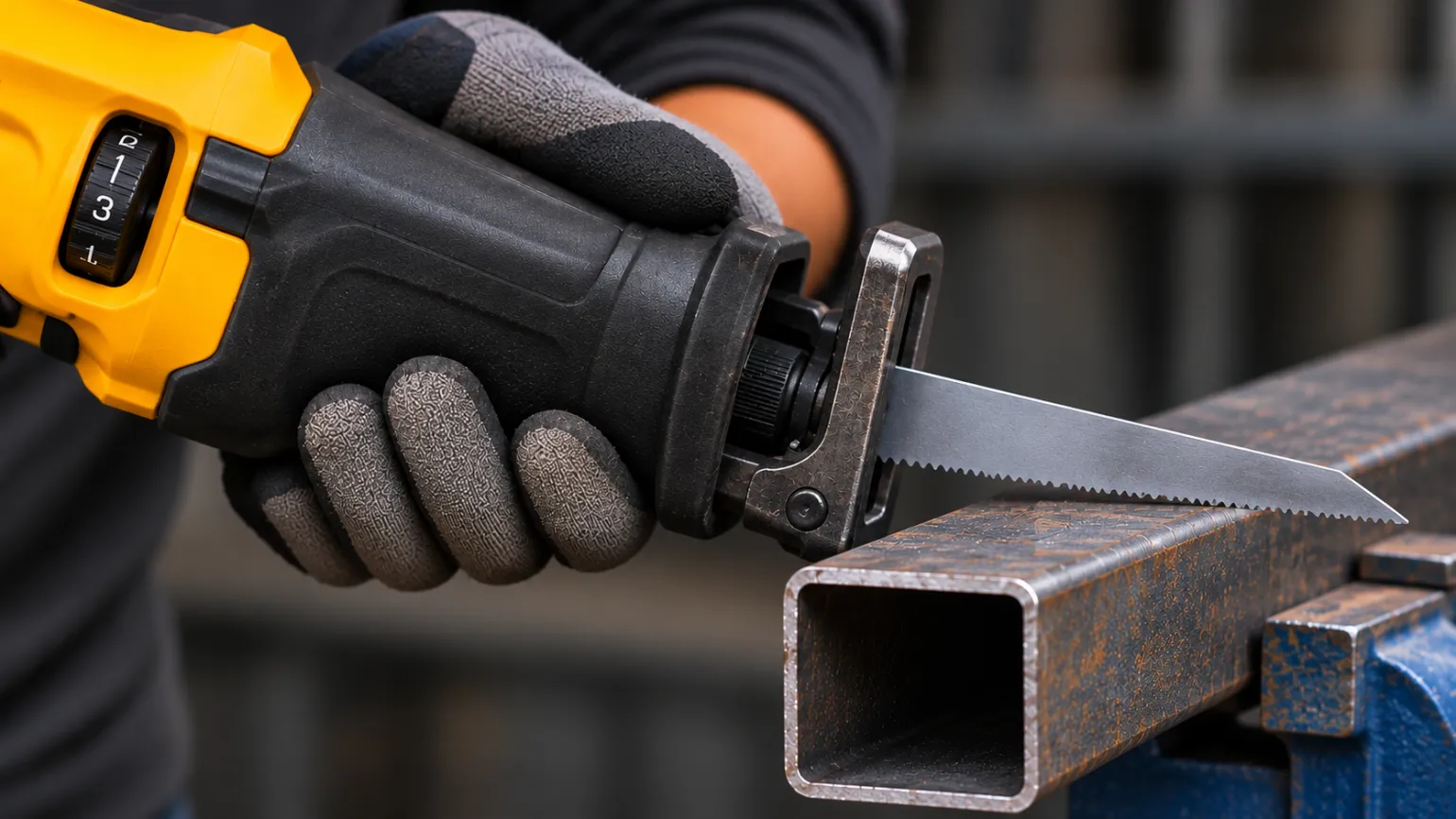
Hollow sections such as box section and tube behave differently. As the blade passes through the near wall and reaches the hollow centre, it loses support and can start to bind or chatter against the far wall. Angling the cut slightly, rather than holding it perfectly square, keeps more of the blade in contact with material at any one time and reduces that binding.

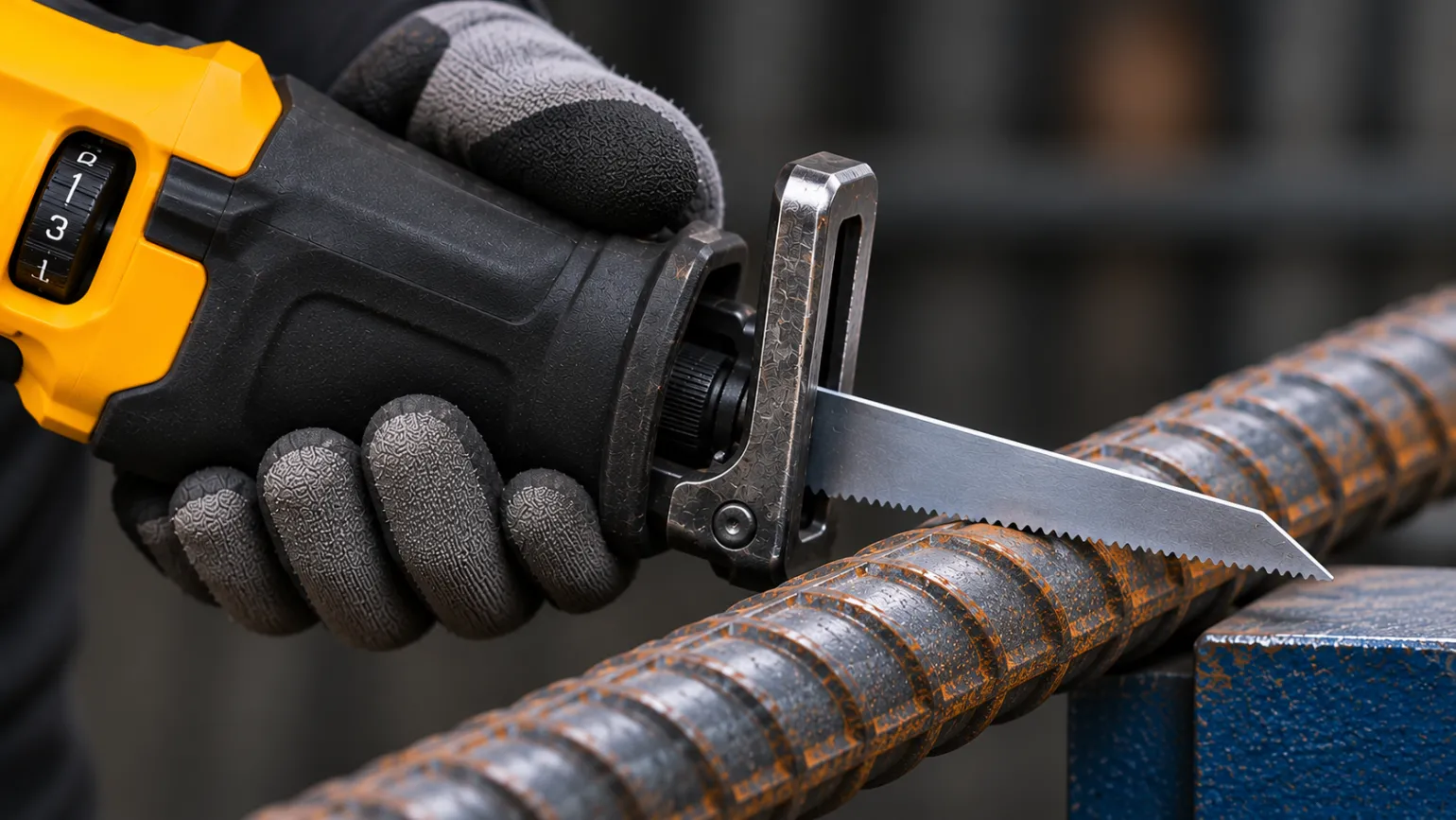
The ridged surface of high yield reinforcing bar can throw a blade off its line at the start of a cut, so it's worth starting the cut on a flat run of the bar rather than right on a rib. Let the blade establish a groove before applying full pressure.

Sheet metal is the opposite problem. While the thicker end of sheets and plates cuts much like solid bar, the lighter gauges are too thin to give the blade enough material to bite into cleanly. This is where a higher TPI blade and a slower, more controlled stroke earns its keep, since forcing a low-TPI blade through sheet tends to grab and tear rather than cut.
Cutting Technique by Material

Solid bar and structural sections cut fairly predictably: keep the blade square to the material and let the stroke length do the work rather than forcing lateral pressure.

Hollow sections such as box section and tube behave differently. As the blade passes through the near wall and reaches the hollow centre, it loses support and can start to bind or chatter against the far wall. Angling the cut slightly, rather than holding it perfectly square, keeps more of the blade in contact with material at any one time and reduces that binding.

The ridged surface of high yield reinforcing bar can throw a blade off its line at the start of a cut, so it's worth starting the cut on a flat run of the bar rather than right on a rib. Let the blade establish a groove before applying full pressure.

Sheet metal is the opposite problem. While the thicker end of sheets and plates cuts much like solid bar, the lighter gauges are too thin to give the blade enough material to bite into cleanly. This is where a higher TPI blade and a slower, more controlled stroke earns its keep, since forcing a low-TPI blade through sheet tends to grab and tear rather than cut.


Safety Considerations

Reciprocating saws produce meaningful hand-arm vibration during extended use: HSE's own risk assessment guidance lists them among the higher-vibration hand tools, with levels running as high as 27 m/s², and treats more than about an hour's daily trigger time on tools in that range as pushing into medium-risk exposure. Worth factoring in if you're cutting for extended periods rather than a single job, not just a comfort issue.

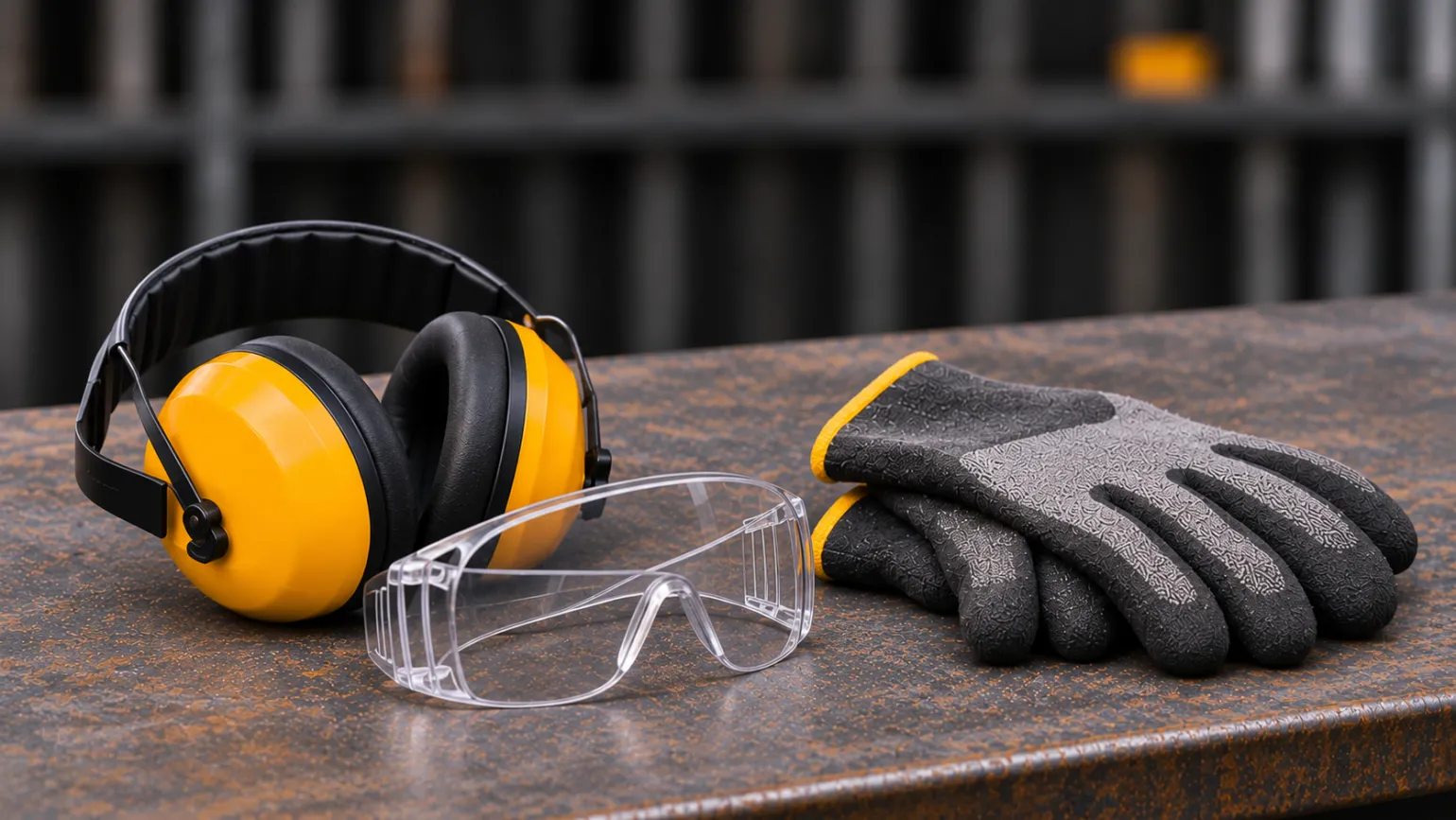
Eye protection and hearing protection should be worn for any metal cutting, along with sturdy gloves, metal cutting throws hot, sharp swarf, and a blade that binds can kick back unexpectedly. For eye, ear and hand protection suited to jobs like this, download our Access and Safety Catalogue for the full spec sheet. Whatever you're cutting should be clamped or otherwise secured rather than held by hand, since an unsecured workpiece is one of the more common causes of a bound or snapped blade.

Safety Considerations

Reciprocating saws produce meaningful hand-arm vibration during extended use: HSE's own risk assessment guidance lists them among the higher-vibration hand tools, with levels running as high as 27 m/s², and treats more than about an hour's daily trigger time on tools in that range as pushing into medium-risk exposure. Worth factoring in if you're cutting for extended periods rather than a single job, not just a comfort issue.

Eye protection and hearing protection should be worn for any metal cutting, along with sturdy gloves, metal cutting throws hot, sharp swarf, and a blade that binds can kick back unexpectedly. For eye, ear and hand protection suited to jobs like this, download our Access and Safety Catalogue for the full spec sheet. Whatever you're cutting should be clamped or otherwise secured rather than held by hand, since an unsecured workpiece is one of the more common causes of a bound or snapped blade.


BM Steel's Cutting Service

Rather than stocking a specific saw or blade recommendation here, the simplest option for most readers is our Free Cutting Service for steel and GRP, with our dedicated Saw Cutting service handling the precision end of it. Send us the material and the sizes you need, and our depot network takes care of it, no blade selection or TPI matching required.


Frequently Asked Questions


How thick metal can a reciprocating saw cut?

A reciprocating saw comfortably cuts steel up to around 10mm with a standard bi-metal blade, sheet, thin box section, standard bar stock. Push into 12mm plate or heavier with a carbide-tipped blade, and both cutting time and blade wear increase noticeably. Beyond that, it's usually better handled with a cold saw or plasma cutter, or ordered pre-cut to size rather than fought through by hand, which is exactly what our cut-to-size service exists for.


What should you not do with a reciprocating saw?

The most common mistake is mismatching blade length to material: a blade more than a couple of inches longer than what you're cutting will flex and wander at the tip rather than cutting cleanly, especially on thinner stock. 

Running orbital action, where the saw has it, is another one to avoid on metal, it's built for fast wood demolition, and on metal it just makes the blade bounce and slows the cut rather than helping it. And when cutting into a wall, floor or existing structure rather than stock material, don't cut blind, check what's on the other side first, hidden wiring, pipework or fixings are a real risk with a tool that cuts through almost anything in its path.


What are the most common uses for a reciprocating saw?

Demolition is the classic use: reciprocating saws handle blade depths of six inches or more, letting them cut clean through walls and rough openings that a circular saw's shallow depth can't reach. 

Plumbers reach for them to cut pipe in tight spaces a hacksaw is too slow for, and electricians use them on conduit for the same reason. In metalwork specifically, they're the practical choice for on-site cuts to bar, tube and sheet where setting up a bandsaw isn't worth it for one job. Pruning is the less obvious one: fitted with a coarse, low-TPI blade, a reciprocating saw goes through branches a hand pruner can't manage.


What type of blade is best for cutting metal in a reciprocating saw?

Wavy-set bi-metal blades are generally the best choice for cutting metal, giving a smoother, more wear-resistant cut than the alternative tooth pattern, a detail most guides skip in favour of just talking about TPI. Wavy-set teeth alternate in a gentle wave, while raker-set teeth alternate more aggressively left to right for a faster but rougher cut, better suited to demolition-style cutting than precision work. If you only keep one blade in the kit, a bi-metal blade with wavy-set teeth around 14 TPI is the closest thing to an all-purpose choice for general steel cutting.


Posted by Craig Silvain
2nd September 2026

Back to news

Recently viewed...
Eazypost Tig Weld Post StemEazypost Tig Weld Post Stem
2' Bright Round Bar