
Common Uses of Steel in Different Industries

Steel is used across construction, manufacturing, transport, infrastructure and engineering, from the beams supporting buildings and bridges to the sheet metal used in vehicles and industrial machinery. Its strength, workability and range of available grades make it suitable for applications with different demands on durability, cost and performance.

The type of steel matters just as much as where it's used. Structural steel, mild steel, stainless steel and engineering grades each have different properties, and choosing the right material depends on the job it needs to do. This guide covers the common uses of steel across industries, the products involved and the factors that influence material selection.


Why Is Steel Used Across So Many Industries?

Steel's versatility comes from its combination of mechanical properties, workability and cost. It can be rolled into beams, formed into sheets, drawn into wire or machined into components, allowing manufacturers and fabricators to use different steel products across a wide range of projects.


Property

Why It Matters

Strength

Suitable steel grades can withstand substantial loads, making them important for structural frameworks, machinery and transport components.

Workability

Many steels can be cut, welded, drilled, bent or machined into the shapes required for fabrication.

Durability

The right grade and finish can provide resistance to wear, impact and demanding service conditions.

Versatility

Alloying and heat treatment allow manufacturers to adjust properties such as hardness, strength and corrosion resistance.

Cost and availability

Common grades are widely available in standard dimensions, making them practical for projects where material cost and lead time matter.

These properties vary between grades. Mild steel is generally easier to fabricate than hardened tool steel, for example, while stainless steel offers greater corrosion resistance in suitable environments. Understanding those differences helps explain why steel is used in such a wide range of applications.
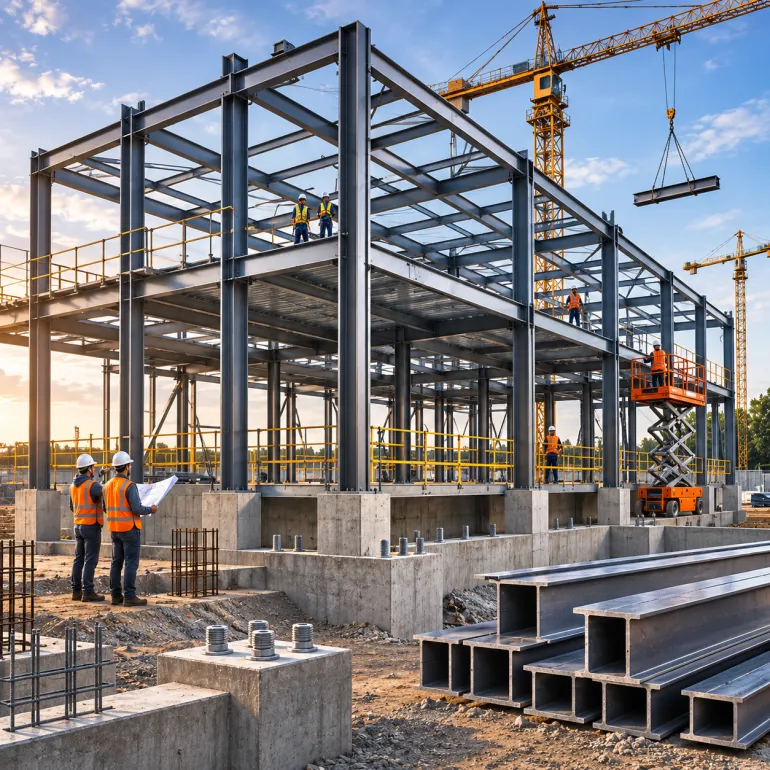


6 Common uses of steel across different industries

Steel serves different purposes depending on the industry. Construction relies on its ability to support substantial loads, while manufacturing and engineering use its workability and range of mechanical properties to produce individual components and finished products


1. Construction and Structural Steelwork

Structural steel provides the framework for buildings, warehouses and industrial units, with beams and columns carrying loads through the structure and into its foundations.

Different steel products serve specific construction purposes:


			Steel Product
			
			
			Common Applications


			Universal beams and columns  
			
			
			Building frames and load-bearing structures


			Hollow sections  
			
			
			Structural supports, bracing and fabricated frames


			Steel plates  
			
			
			Base plates, connections and stiffeners


			Reinforcement bar  
			
			
			Tensile reinforcement in concrete structures


			Reinforcement mesh  
			
			
			Reinforced concrete slabs and other specified elements


The choice between structural sections, hollow sections and other products depends on the loads involved and how the structure is assembled. Grade, dimensions and connections must meet the structural design, while exposed steelwork may also need galvanising or protective coatings to prevent corrosion.


1. Construction and Structural Steelwork

Structural steel provides the framework for buildings, warehouses and industrial units, with beams and columns carrying loads through the structure and into its foundations.

Different steel products serve specific construction purposes:

Steel Product

Common Applications

Universal beams and columns

Building frames and load-bearing structures

Hollow sections

Structural supports, bracing and fabricated frames

Steel plates

Base plates, connections and stiffeners

Reinforcement bar

Tensile reinforcement in concrete structures

Reinforcement mesh

Reinforced concrete slabs and other specified elements


The choice between structural sections, hollow sections and other products depends on the loads involved and how the structure is assembled. Grade, dimensions and connections must meet the structural design, while exposed steelwork may also need galvanising or protective coatings to prevent corrosion.


2. Manufacturing and Metal Fabrication

Manufacturing uses steel for equipment frames, storage systems, brackets, housings and fabricated components. Its ability to be cut, formed and joined makes it suitable for individual parts and larger production runs.

Mild steel is particularly common because many grades offer good weldability and formability at a relatively low cost. Steel sheets and plates can be formed into panels, covers and brackets, while flat bar, angle and hollow sections suit frames and supports.

The required grade, thickness and finish depend on the application. A welded bracket, for example, has different material requirements from a precision-machined component or a part exposed to repeated loading.

3. Automotive and Transport

Steel is widely used in vehicle manufacturing because of its strength, formability and crash performance. High-strength and advanced high-strength grades allow manufacturers to use thinner sections in suitable components, helping balance structural performance with vehicle weight.

Common applications include:

  • Body panels and structural components
  • Chassis and supporting assemblies
  • Crash-management and reinforcement components
  • Suspension and drivetrain components
  • Commercial vehicle frames and trailers

Material selection depends on how each component is manufactured and used. Body panels need suitable formability, while parts exposed to repeated stress require appropriate strength and fatigue performance. Similar considerations apply to rail vehicles, agricultural machinery and commercial transport.

4. Infrastructure and Civil Engineering

Steel supports major infrastructure, including bridges, railways, highway barriers and utility structures. Bridges use beams, girders and bracing to carry loads, while reinforced concrete combines steel's tensile resistance with concrete's compressive strength.

High yield reinforcement bar is used in concrete foundations, retaining walls and other civil engineering structures where tensile reinforcement is required.

Infrastructure steelwork must often withstand repeated loading, temperature changes and prolonged environmental exposure. Suitable grades and corrosion protection, including coatings or galvanising, help maintain performance in demanding conditions, particularly where moisture or road salts are present.


5. Mechanical Engineering and Industrial Machinery

Mechanical engineering uses steel for shafts, gears, axles, pins and other components exposed to mechanical loads, movement and wear. These applications often require closer control of strength, toughness, machining tolerances and heat treatment than general fabrication work.

Engineering grades such as EN8 and EN24 are selected according to the component's requirements. Heat treatment and supply condition affect their mechanical properties, meaning the grade name alone doesn't establish how the finished part will perform.

The choice of engineering steel depends on the application. A heavily loaded shaft may need different properties from a machined pin, while equipment exposed to abrasion may require specialist wear-resistant plate. Material specifications and test certificates should be checked where verified properties are required.

6. Everyday Products and Specialist Applications

Steel also appears in household appliances, furniture, storage systems, tools and packaging. Different grades provide the strength, durability, appearance or corrosion resistance needed for each product.

Stainless steel is commonly used in kitchen equipment and food processing machinery, where cleanability and corrosion resistance matter. Steel packaging, including food cans, uses thin material with specialised coatings rather than the heavier sections associated with construction.

These applications demonstrate how steel can be adapted to very different uses through the choice of grade, product form and finish.


Commmon uses of mild steel

Mild steel is widely used in construction and fabrication because its low carbon content gives many grades good workability. It's relatively straightforward to cut, form and weld, making it suitable for gates, railings, brackets, machinery supports, storage systems and general sheet metal components.

Mild steel is a type of steel with a low carbon content, making it more ductile and easier to work with than many other steel grades.

Cost is another advantage. Mild steel is generally more economical than stainless steel or specialist alloy grades, making it practical where additional material properties aren't required.

Its main limitation is corrosion. Exposed mild steel can rust, so outdoor applications often require painting, galvanising or another protective finish. Where greater wear resistance, strength or corrosion resistance is needed, a different grade may be more suitable.

The properties of mild steel make it a common choice for everyday fabrication, although the final specification should always reflect the intended application.


Matching steel products to their applications

The examples above show that choosing steel involves more than identifying the industry it will be used in. The product form, grade, dimensions and surface finish all influence whether a material is suitable for a particular job.


Application

Common Steel Product

Key Consideration

Building frames

Universal beams and columns

Structural loads and specified grade

Bracing and fabricated frames

Hollow sections and steel angles

Connection design and fabrication

Reinforced concrete

Reinforcement bar and mesh

Reinforcement specification and placement

Brackets and machinery covers

Steel sheets and plates

Thickness, formability and strength

Shafts and machined components

Engineering steel bar

Grade, machining and heat treatment

Wear liners and equipment protection

Wear-resistant steel plate

Abrasion resistance and processing

Exposed metalwork

Galvanised or suitably coated steel

Corrosion exposure and maintenance

A steel section that works well for a building frame may be unsuitable for a machined shaft, even if both components require substantial strength. Starting with the application and its requirements makes it easier to narrow down the appropriate product and specification.


BM Steel's Wide Range & Cutting Services

BM Steel stocks steel for construction, fabrication and engineering, from structural sections for building frameworks to sheets and plates for fabricated components and engineering steel for machined parts. Our Free Cutting Service allows eligible products to be ordered cut to length, reducing preparation work on-site or in the workshop. Whatever your project calls for, our depot network can supply steel in a range of grades and sizes for delivery or collection.

Structural Sections | Sheets & Plates | Engineering Steel


FAQS About the uses of steel


What are the most common uses of steel?

Steel is commonly used in construction, manufacturing, transport, infrastructure and engineering. Typical applications include building frames, bridges, reinforced concrete, vehicle components, machinery, tools and everyday appliances. The specific grade and product form depend on the strength, workability and environmental resistance required.


What is steel used for in construction?

Steel is used for structural beams, columns, frames, roof supports, reinforcement and connection components. It also appears in staircases, platforms, barriers and other fabricated building elements. Structural steel provides strength and support, while reinforcing steel works with concrete to resist tensile forces.


Why is mild steel used in manufacturing?

Mild steel is widely used in manufacturing because it is relatively economical, available in numerous forms and generally straightforward to cut, form and weld. This makes it useful for brackets, frames, enclosures and other fabricated components. Its suitability still depends on the grade, required strength and operating environment.


What is the difference between structural steel and engineering steel?

Structural steel is typically specified for load-bearing frameworks, including beams, columns and other construction elements. Engineering steel is commonly selected for machined components such as shafts, pins and gears, where properties including hardness, tensile strength and heat-treatment condition may be especially important. The distinction is based on specification and intended use, rather than one type being universally stronger.


Is steel recyclable after use?

Yes. Steel can be recycled repeatedly and used to manufacture new products, including construction materials, machinery components and other manufactured goods. Its magnetic properties also help with separation during recycling. The suitability of recycled steel for a particular application depends on the final product meeting the required material specification.


Posted by Craig Silvain
20th November 2026

Back to news